

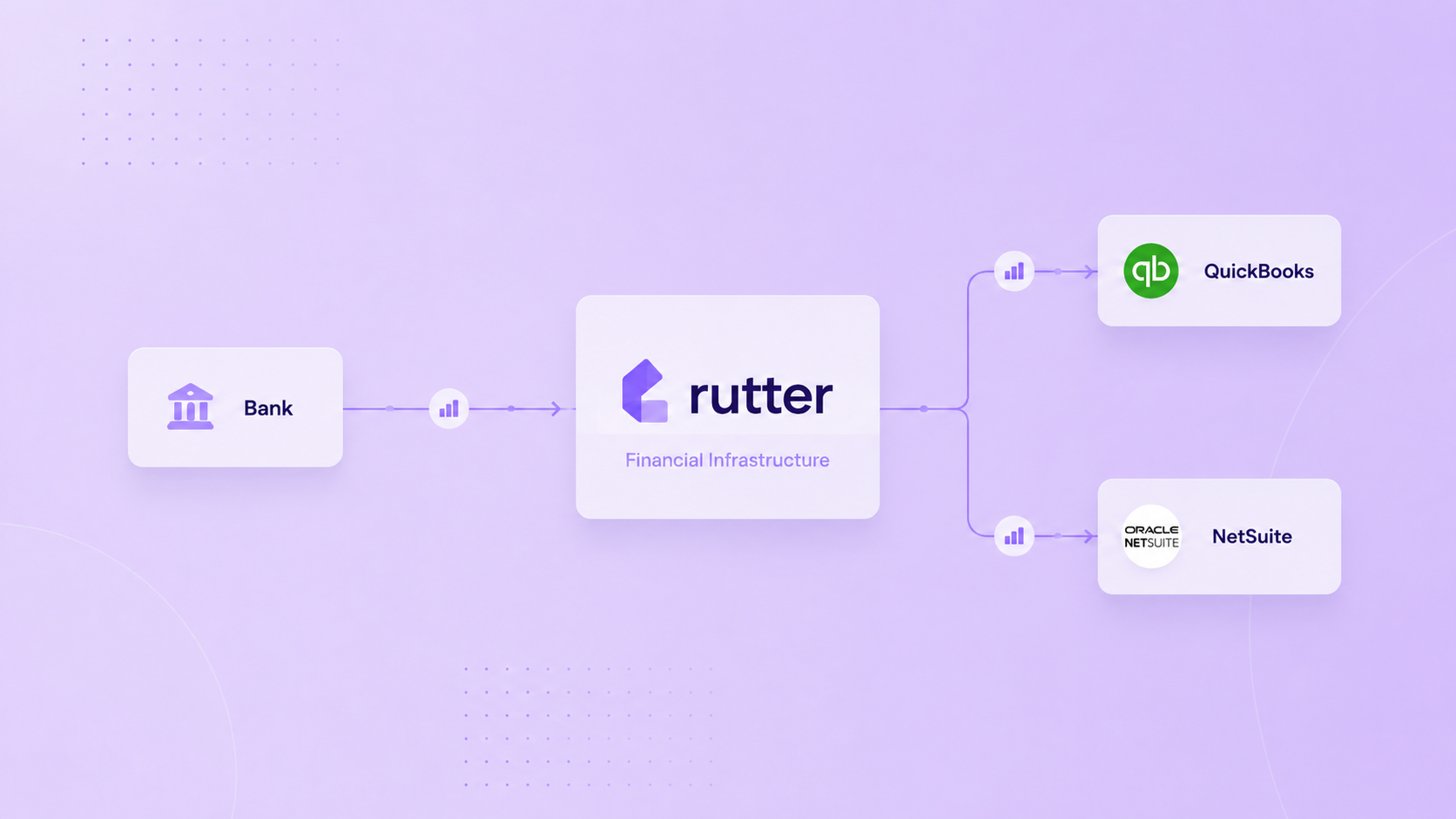
Bank Feeds as Product Infrastructure: How Neobanks, Card Programs, and Fintech Platforms Sync Transactions Into Accounting Systems
Quick answer: Bank feeds let fintech products send card and bank-account transactions into a customer's accounting system so finance teams can reconcile activity without manual exports. For neobanks, card programs, spend platforms, and embedded-finance products, that makes bank feeds less like a connector feature and more like adoption infrastructure.
A fintech product can win a customer at the moment of account opening and still lose adoption during the month-end close. Finance teams do not only ask whether a card works, whether payments move, or whether a dashboard looks useful. They ask whether the activity can be reconciled in the accounting system they already trust.
Bank feeds answer that question. They create a path for transactions from a fintech product, card program, or bank account to flow into accounting platforms such as QuickBooks, Xero, Sage, or NetSuite. The customer gets fewer exports, fewer manual uploads, fewer reconciliation gaps, and a stronger reason to keep using the financial product.
What bank feeds do
A bank feed is a connection that lets bank or card transaction data appear inside an accounting platform. In a traditional workflow, a finance user may download a CSV from a bank or card product, clean the file, upload it to accounting software, match transactions, and fix mismatches manually. Bank feeds automate much of that import path.
For fintechs, the direction matters. Smart banking products often pull a customer's bank data from third-party institutions. Bank feeds for fintechs often push a fintech's own card or account activity into the customer's accounting system for reconciliation. Those are related data problems, but they are not the same product motion.
Why bank feeds matter to product teams
Bank feeds improve product adoption because they reduce the accounting work created by the product. A card platform becomes easier to adopt when every transaction can land in the customer's books. A neobank becomes stickier when account activity flows into reconciliation workflows. An expense-management product becomes more credible when spend activity does not create manual cleanup.
Product teams sometimes treat reconciliation as a back-office concern, but finance adoption often determines whether a fintech product expands across an account. If the product helps operators move money but creates accounting work later, the initial value gets discounted. If activity lands cleanly in the accounting system, the product becomes easier for finance teams to approve, trust, and expand.
The basic workflow
A bank-feed implementation usually includes several layers. The fintech establishes a supported platform path. The customer connects the relevant account or card product. The product maps source accounts to destination accounts inside the accounting environment. Transaction data is validated, synced, monitored, and made available for reconciliation.
Each layer affects the customer experience. A weak setup flow creates wrong mappings. Weak validation creates rejected transactions. Weak monitoring creates stale data that nobody sees until finance starts closing the books. Weak support tooling creates a long path from customer complaint to engineering diagnosis.
Platform behavior differs more than buyers expect
QuickBooks, Xero, Sage, and NetSuite do not behave like interchangeable destinations. Platform setup, authentication, partnership requirements, transaction ingestion, field limits, and reconciliation flows can vary materially. A workflow that feels clean in one accounting platform can require a different onboarding pattern in another.
Xero's Bank Feeds API is a closed API available to financial institutions with an established financial services partnership. Rutter's Xero bank-feeds workflow centers on joining that partnership path, onboarding customers, and continuously syncing transaction data into the accounting instance for reconciliation. Intuit bank feeds have a different workflow shape, including listing and ingestion behavior inside the Intuit ecosystem. Same category, different operational reality.
Bank feeds are not just a transaction endpoint
The transaction object is only one part of the product. A bank-feed account needs to represent a real financial-institution account that can be connected to an account inside an accounting platform. Transactions need durable identifiers, dates, amounts, descriptions, and destination context. Some fields have platform-specific limits. Some ingestion behavior depends on what the end user does inside the accounting product.
That is why bank feeds should be evaluated as workflow infrastructure. The key question is not only whether transactions can be posted. The better question is whether the provider helps the product manage setup, mapping, validation, ingestion visibility, data freshness, duplicates, support states, and reconciliation readiness.
What customers feel when bank feeds work
A strong bank-feed experience usually feels quiet. Transactions appear where finance expects them. Reconciliation requires less manual work. Account mappings remain understandable. Errors are visible before they become a month-end surprise. Support can answer customer questions without escalating every issue to engineering.
Those outcomes have commercial value. Cleaner accounting workflows reduce friction during onboarding. Reliable sync increases confidence after launch. Finance teams become less likely to push back on wider product adoption. Product leaders can position the feature as operational enablement rather than only data connectivity.
Where bank-feed implementations fail
The most common failures are not always dramatic outages. Quiet issues do more long-term damage. Wrong account mappings lead to reconciliation pain. Retry paths create duplicates. A connection stays active while transaction freshness drifts. Error states collapse into generic messages. A finance user cannot tell whether a missing transaction is delayed, rejected, mapped incorrectly, or waiting for action inside the accounting platform.
Strong implementations monitor these problems at the connection level. They track last attempted sync, last successful sync, ingestion status, rejected transactions, duplicate prevention events, mapping state, and whether user action is required. Product reliability lives in those details.
What to evaluate in a bank-feed provider
Start with the accounting platforms your customers actually use. Then ask whether the provider supports the workflows, not only the logos. Rutter's Bank Feeds API and Xero Bank Feeds guide are useful examples of how platform-specific mechanics change the implementation work. Does the provider help with Intuit, Xero, Sage, and NetSuite differences? Can the team explain setup and reconciliation behavior? Is there visibility into transaction ingestion and freshness? How are duplicates prevented? How are support teams expected to diagnose failures?
Also evaluate the support model. Bank feeds touch customer onboarding, finance operations, platform partnerships, accounting workflows, and engineering reliability. A provider that understands only the endpoint surface may still leave your team owning the hardest parts.
Why bank feeds belong in the financial OS conversation
A financial operating system for SMBs cannot stop at moving money. It needs to connect the activity of cards, bank accounts, invoices, bills, payments, and ledgers. Bank feeds are one of the mechanisms that make those surfaces feel connected. They turn transaction activity into accounting-ready data and help the product live inside the finance workflow instead of beside it.
For neobanks, card programs, and embedded-finance teams, bank feeds can become a retention feature, a finance-adoption feature, and a product-expansion feature at the same time. The technical work is real, but the strategic point is simple: when transactions reconcile cleanly, the financial product becomes easier to keep using.
