.png)
Industry
Remittance Advice: The Missing Link Between Payment and Reconciliation
Learn what remittance advice contains, how it differs from a payment confirmation, and why structured data improves invoice matching.


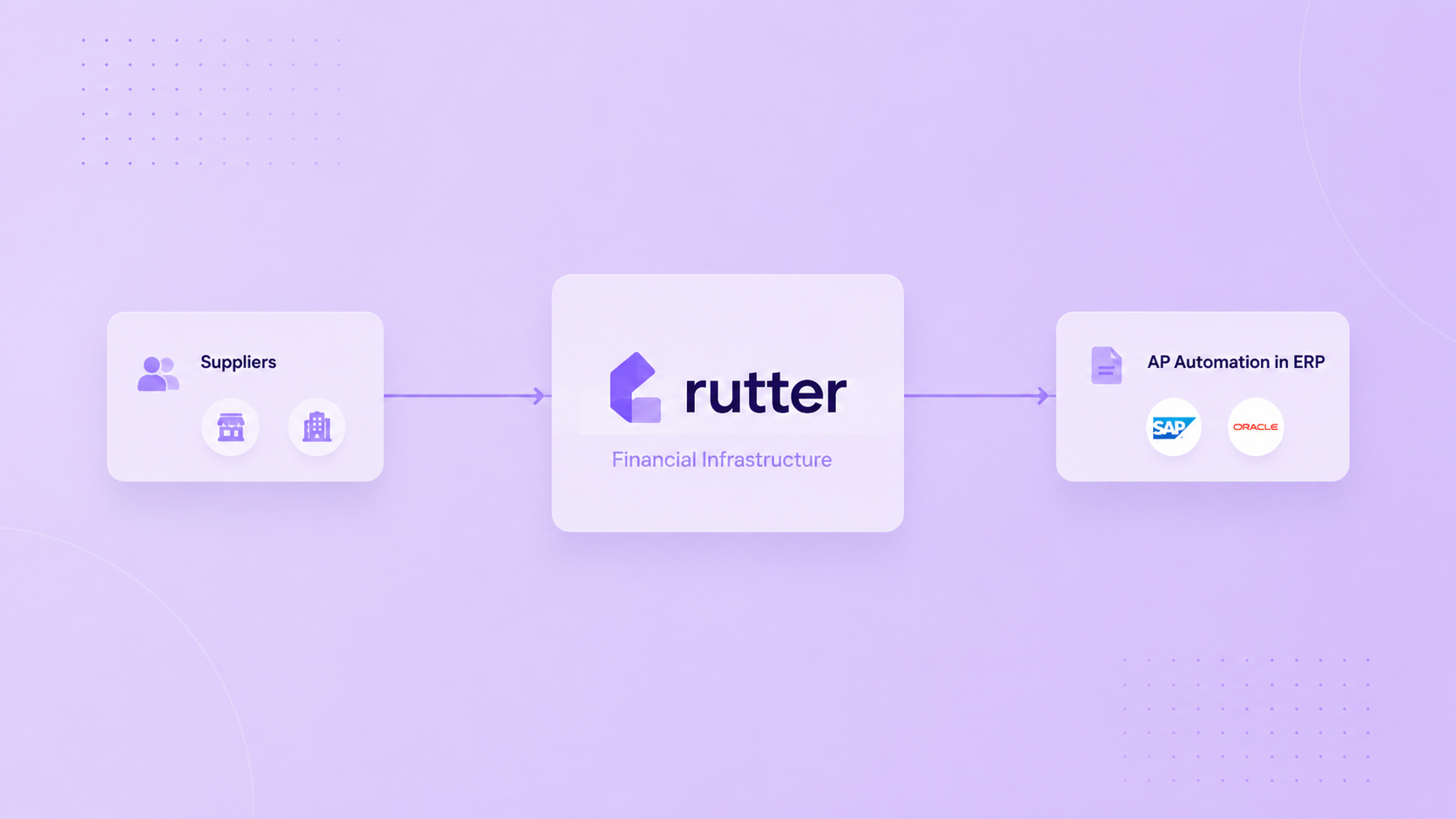
SMB lending is a data problem before it is a capital problem. Lenders need to understand revenue, cash flow, expenses, liabilities, account balances, payout timing, refund rates, seasonality, and business stability. Borrowers want fast decisions without uploading PDFs, CSVs, bank statements, tax documents, and screenshots.
An underwriting API helps solve both sides. It connects lenders to the systems where the borrower's financial data already lives: accounting software, commerce platforms, payment processors, bank accounts, and ERPs. Instead of relying only on self-reported or stale documents, lenders can build decisioning workflows on more current business data.
Rutter’s Business Underwriting solution and unified API infrastructure are built for this kind of lending workflow. Rutter can pull accounting, commerce, and payment data across major systems so lenders can evaluate businesses on real operating signals.
An underwriting API gives a lending product access to business data used to evaluate credit risk. In SMB and merchant lending, that data may include financial statements, cash flow, accounts receivable, accounts payable, revenue, orders, payouts, balances, refunds, chargebacks, expenses, and transaction history.
A useful underwriting API should support data from multiple systems, not just one. Accounting data may show financial statements and ledger history. Commerce data may show live sales and inventory. Payment data may show payout timing and revenue settlement. Bank or ERP data may show cash position and obligations.
Together, those sources help lenders answer a practical question: can this business repay capital based on how it actually operates?
Traditional underwriting often depends on static documents. Those documents are useful, but they can be stale, incomplete, and costly for borrowers to gather. SMBs may not have clean financial statements ready. Merchants may have fast-changing revenue. Seasonal businesses may look risky or healthy depending on when the snapshot is taken.
Real-time business data improves underwriting in several ways:
Rutter’s product updates reference lending use cases where accounting and commerce data support underwriting across merchant and SMB products. Examples include using real-time access to balances, store payouts, orders, and merchant data to improve decision speed and expand financial products.
An underwriting API should not treat all business data as interchangeable.
Accounting data helps answer:
Commerce and payment data help answer:
A lender evaluating a merchant may need both. Accounting data provides financial structure. Commerce and payment data provide current activity. Rutter’s Commerce API can help product teams access orders, payouts, inventory, and merchant activity, while the Accounting API connects to financial statements and ledger data.
A lending product built on an underwriting API usually follows a pattern:
Rutter’s Rutter Link helps with the connection and consent step. Rutter’s Unification Layer helps normalize platform-specific models. Rutter’s Monitoring helps teams track sync history, connection health, webhooks, and operational reliability.
Product and risk teams should ask specific questions when choosing an underwriting API:
Underwriting products fail when data access is too shallow or too unreliable. A lender should not have to choose between borrower experience and risk quality.
An underwriting API connects a lending product to business financial and operating data used for credit decisions. It may pull accounting, commerce, payment, bank, and ERP data.
Useful data includes financial statements, cash flow, balances, revenue, orders, payouts, expenses, receivables, payables, refunds, chargebacks, and transaction history.
Real-time data can reduce borrower friction, provide fresher inputs, and support ongoing monitoring. Documents are useful, but they can be stale and manual to process.
Rutter connects lenders to accounting, commerce, payment, and ERP data through a unified API, with Link for authentication, a unification layer for normalized models, and monitoring tools for production reliability.
SMB lending does not need more paperwork. It needs better data access, cleaner consent flows, and reliable connections to the systems where businesses already operate. An underwriting API gives lenders a way to evaluate borrowers on current financial reality instead of forcing them through manual evidence collection.
For fintech teams, the opportunity is larger than faster decisions. Real-time underwriting data can support dynamic credit limits, merchant capital, embedded lending, renewal offers, and ongoing portfolio monitoring. Rutter provides the integration layer behind those workflows so lenders can focus on risk, capital, and product experience.

Building integrated products is hard. We can do that together. Let's chat.
.png)
.png)