.png)
Industry
Remittance Advice: The Missing Link Between Payment and Reconciliation
Learn what remittance advice contains, how it differs from a payment confirmation, and why structured data improves invoice matching.


Regional banks know their business customers. They have relationships, deposits, local trust, treasury services, credit programs, and payment rails. What many do not have is a modern business banking product that feels competitive with fintech platforms.
That gap has become a growth problem. SMB customers increasingly expect their banking product to include AP automation, invoicing, expense management, forecasting, reconciliation, and accounting connectivity. They do not evaluate the bank only by relationship. They evaluate whether the product helps them run their financial operations.
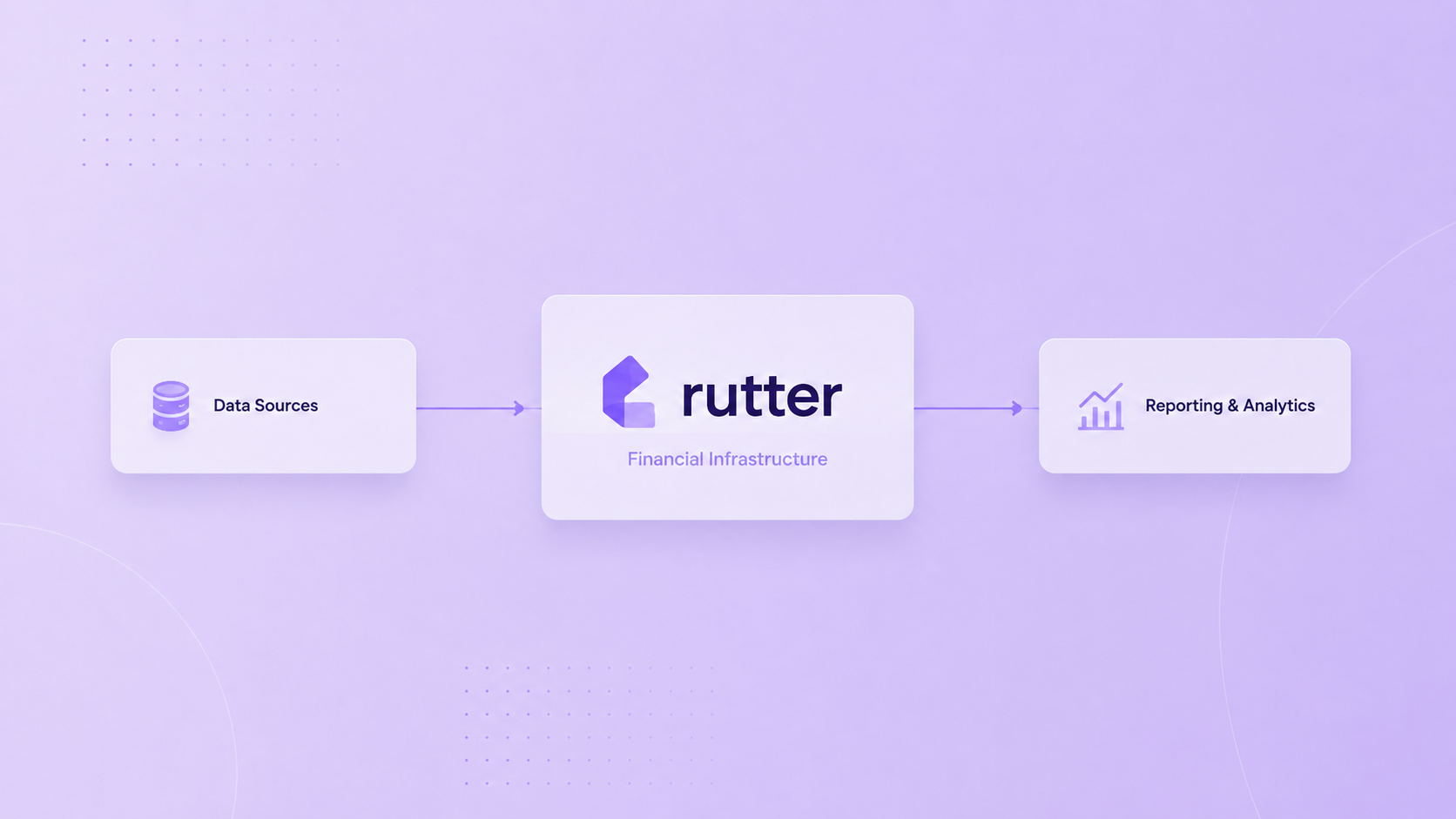
A white label banking platform gives regional banks a way to compete on product without building every module from scratch. Rutter Embedded Digital is built for this exact situation: the bank keeps the brand, rails, customer relationships, and core banking infrastructure. Rutter provides the white-labeled product surface and the integration layer behind it.
A white label banking platform is a digital product that a bank can offer under its own brand without building the full software stack internally. For business banking, the platform may include AP, AR, expense management, cash flow forecasting, bank reconciliation, lending workflows, and accounting integrations.
The key is that the platform should not feel generic. A useful white label banking platform has to work with the bank's existing infrastructure, brand standards, customer workflows, and product roadmap. It should extend the bank's relationship with customers, not replace it.
Rutter Embedded Digital is white-labeled financial UI that lives inside a bank or fintech's web or mobile product. It can deploy as one module, like AP automation, or expand into a broader Financial OS under the bank's brand.
Regional banks face a difficult product equation. Customers want more software. Fintech competitors move faster. Internal development teams are often limited. Core banking systems were not designed to ship modern AP, AR, expense, forecasting, and reconciliation products quickly.
Building from scratch can mean years of work:
A white label banking platform changes the equation. It lets the bank focus on customers, product strategy, credit, deposits, rails, and relationship value while using a partner for the product and integration layer.
Business banking products become more valuable when they connect to the customer's books. A standalone banking app can show balances and transactions. An integrated financial platform can help customers pay bills, send invoices, manage expenses, forecast cash flow, and reconcile activity back into accounting.
Rutter’s Rutter Link helps customers connect their accounting or ERP systems through a white-labeled authentication flow. Rutter’s Accounting API and Commerce API help ingest and write data across the systems customers already use.
For SMBs, that usually means QuickBooks Online and Xero. Those platforms support bank feeds and reconciliation but not full native app embedding. So the bank's own digital product remains the primary surface. Rutter Embedded Digital gives the bank that surface while keeping accounting sync underneath.
A regional bank should evaluate white label banking platforms by whether they help customers run core finance workflows. Useful modules include:
Rutter’s Bill Pay Automation and Invoicing Automation capabilities are especially relevant because AP and AR are daily workflows. A bank that can help customers pay money out, collect money in, and keep the books updated moves closer to becoming the customer’s Financial OS.
A white label banking platform should not require the bank to give up its rails. Regional banks already have payment infrastructure, core banking relationships, ACH, wires, card programs, and compliance operations. The product layer should make those rails more usable, not replace them.
Rutter's model is rails-neutral. The bank provides the rails and the brand. Rutter provides the product layer, integration infrastructure, data normalization, authentication, and observability. That means the bank can modernize the customer experience while keeping the financial infrastructure and customer relationship it already owns.
This distinction matters for customer trust. Business customers want a better product, but they do not necessarily want their banking relationship displaced. A white label platform should make the bank feel more capable, not less central.
A bank serving SMB customers often needs a digital app. A bank serving mid-market customers may need to be inside the ERP. Those are not the same product problem.
SMB customers usually run finances from a banking app, fintech dashboard, QuickBooks Online, or Xero. Since QuickBooks Online and Xero do not support full embedded financial applications in the same way mid-market ERPs do, a white-labeled digital product is the right surface.
Mid-market customers often live inside NetSuite, Dynamics, Sage Intacct, SAP, or Workday. For them, AP, treasury, FX, reconciliation, and payment workflows may need to be embedded natively inside the ERP. Rutter’s Financial OS for midmarket ERP explains why the Financial OS moves into the ERP as operational complexity increases.
For banks with both segments, the answer may be both: Embedded Digital for SMBs and Embedded ERP for mid-market customers.
A white label banking platform is a digital product that a bank offers under its own brand, often including AP, AR, expense management, forecasting, reconciliation, and accounting integrations, without building the full platform internally.
Regional banks need product leverage to compete with fintechs that offer modern, integrated business banking tools. White label software can help banks ship faster without building every workflow and integration from scratch.
A well-designed platform should not replace the bank's rails. Rutter’s model works with existing payment rails, core banking systems, and customer relationships while providing the product and integration layer.
White label banking usually lives inside the bank's digital product. Embedded ERP lives inside the customer's ERP. SMB customers usually fit the digital model, while mid-market customers often need ERP-native workflows.
Fintechs raised the bar for business banking software. Regional banks do not have to answer by becoming software companies from scratch. They need a way to turn their rails, customer relationships, and brand into a modern product experience.
A white label banking platform gives them that path. Rutter helps banks deliver AP, AR, expense, forecasting, reconciliation, and accounting connectivity under their own brand, with existing infrastructure intact. Better product does not have to mean losing control. It can mean putting the bank's product where customers need it most.

Building integrated products is hard. We can do that together. Let's chat.
.png)
.png)