
Billment Rebuilt QuickBooks Desktop Support With Rutter
Billment helps businesses streamline payments and accounting by integrating deeply with QuickBooks Online and QuickBooks Desktop.
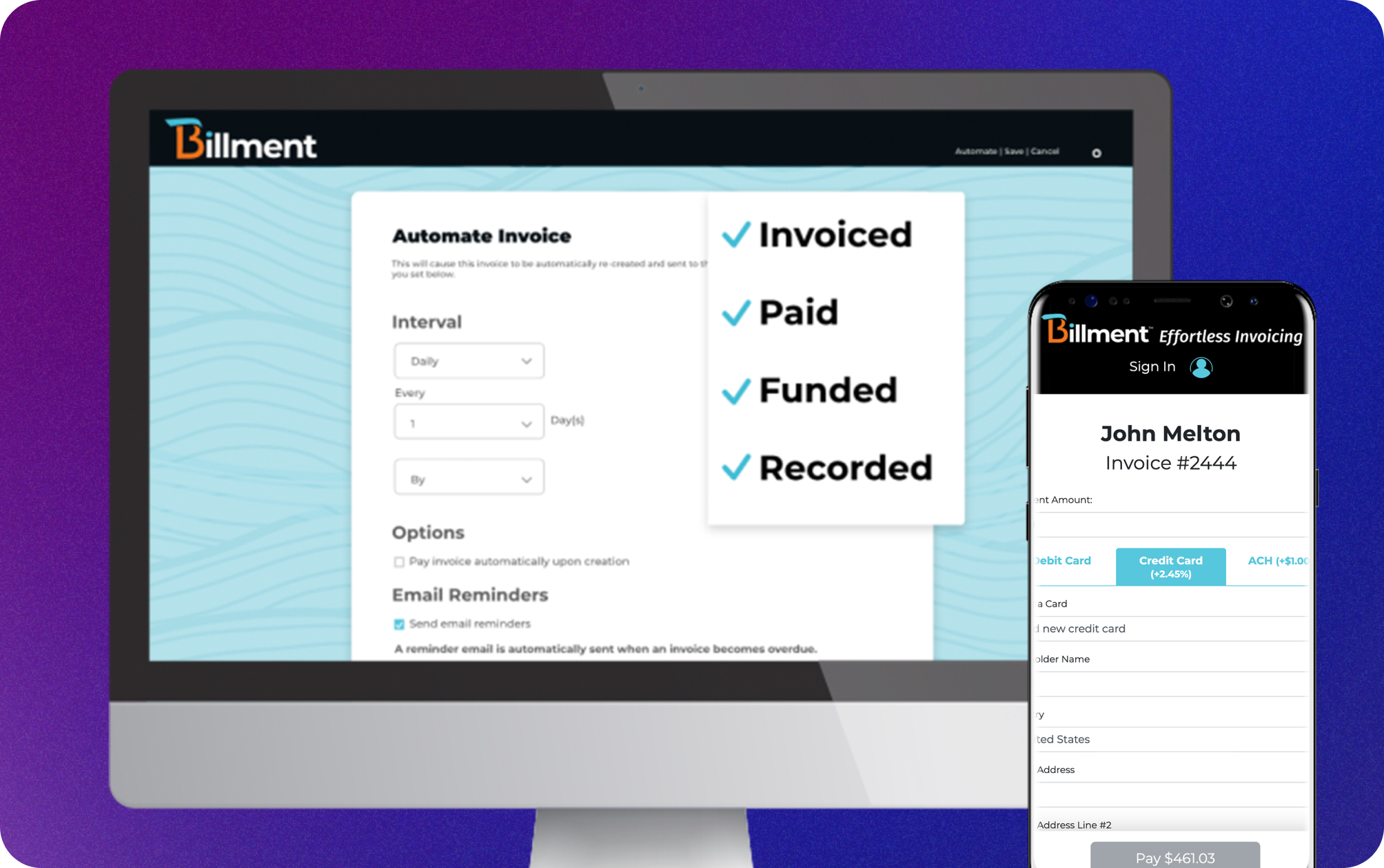
For years, Billment’s QuickBooks Desktop support ran on a third-party provider. Syncs broke without warning. Changes shipped without notice. And every time something went wrong, it was Billment’s customers who felt it first.
When that provider announced it was sunsetting QBD support — with just a few weeks’ notice — Billment faced a critical decision: quietly offboard Desktop customers and absorb the lost revenue, or find a new solution fast enough to keep them. With a small engineering team and no time to build from scratch, they needed a partner who could step in immediately.
“We relied on a third-party for QuickBooks Desktop. Changes were made without notice, syncs broke constantly, and our customers bore the brunt of it.”

Billment evaluated three vendors. Rutter stood out before the first sales call: transparent documentation, predictable pricing, and clear evidence that QBD connectivity actually worked.
The initial build was deliberately scoped — pull invoice data, accept payments — then expanded from there. Rutter’s Solutions team, including early hands-on support from engineers like Linda, saved weeks of iteration by troubleshooting sync issues in real time and shipping fixes fast.
Solving the edge cases that matter
One early friction point: mapping payments to the right accounts in QBD was inconsistent, frustrating Billment’s customers. Rutter quickly built a pathway to specify how payments should be categorized — turning what could have been a deal-breaker into a solved problem. Weekly product updates and expanded taxonomy support gave Billment the stability to bring QBD fully back into their main product.
“Even before talking to your team, we could see from the docs that Rutter would solve the problem. That gave us the confidence to move fast.”
Fewer sync errors meant fewer tickets and less firefighting — customers stopped noticing QBD.
Step-by-step onboarding flows let some customers set up QBD themselves, reducing time-to-value.
Billment can now sell confidently into accounts that refuse to leave Desktop — and retain them.
QuickBooks Desktop remains a core part of Billment’s product, but the relationship with Rutter is about more than QBD. With a small engineering team, building every accounting integration in-house has never been the plan.
Internally, Ramirez frames Rutter as Billment’s “gateway” — the foundation for connecting future accounting platforms as the product expands. The bet is straightforward: lean into a partner that can do the integration work better and faster, and focus Billment’s engineering on what only Billment can build.
“We’re a small engineering team and always will be. It doesn’t make sense for us to build every integration ourselves when Rutter can do it better.”




Get up and running.
Building integrated products is hard. We can do that together. Let's chat.