.png)
Industry
Remittance Advice: The Missing Link Between Payment and Reconciliation
Learn what remittance advice contains, how it differs from a payment confirmation, and why structured data improves invoice matching.


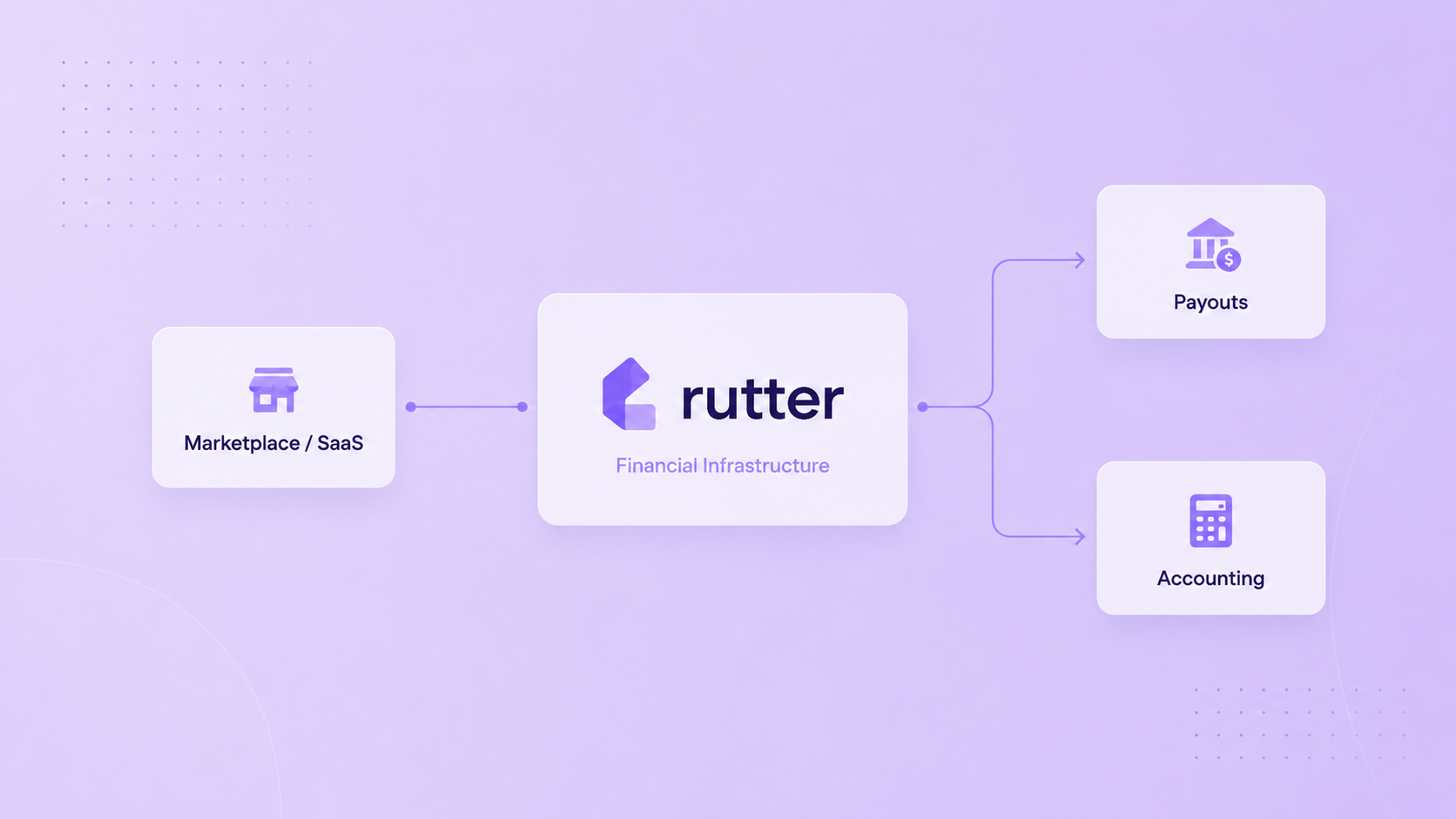
Supplier enablement sounds like a sales motion: convince more vendors to accept card. In practice, it is a data architecture problem. Banks and commercial card issuers need to know which suppliers exist, how much spend flows to each supplier, which suppliers may already accept card, which payment methods customers use today, and where a payment workflow can be changed without creating friction for AP teams.
That data usually lives in ERPs and accounting systems. Vendor records, bills, historical spend, payment methods, subsidiaries, departments, and approval workflows are scattered across NetSuite, Dynamics, Sage Intacct, SAP, QuickBooks, and other platforms. Without a clean way to read and normalize that data, supplier enablement becomes a manual spreadsheet project.
Rutter’s Supplier Enablement work turns that data into a card acceptance workflow. It helps banks and card issuers identify, score, and switch eligible vendor payments to card while working from the systems where AP data already lives.
Supplier enablement architecture is the data and workflow system that helps a bank, card issuer, or fintech move more B2B payments onto card. It connects vendor data, spend history, payment method data, accounting context, card acceptance signals, and customer workflows.
A practical supplier enablement architecture has five layers:
Each layer matters. Data ingestion without scoring produces a database. Scoring without workflow execution produces a report. Workflow execution without accounting context produces operational risk. Supplier enablement becomes valuable when all five layers work together.
Commercial card growth depends on knowing where spend already happens. AP teams do not choose vendors in the abstract. They pay recurring suppliers, one-time vendors, contractors, software providers, logistics companies, manufacturers, service firms, and many other counterparties. Useful supplier enablement starts with the customer's actual vendor universe.
ERP and accounting systems provide the best starting point because they contain:
Rutter’s Accounting API gives product teams read/write access to this accounting and ERP data across major platforms. Supplier enablement teams can use that data to identify high-value payment opportunities without relying on customers to export vendor lists manually.
After vendor and spend data is ingested, the next question is whether a vendor can accept card. That is where card acceptance matching comes in. The system compares supplier records and spend patterns against card acceptance data, network information, and internal issuer data to find vendors likely to support card payments.
The highest-value suppliers are not always the largest vendors. A supplier enablement model may consider:
The goal is not to spam every supplier. The goal is to identify the best-fit vendor payment opportunities and present them in a way that AP teams can act on.
Rutter’s case study material describes a top 10 U.S. bank that needed to automate supplier enablement because manual data collection was too slow to scale. With Rutter, vendor and spend data ingestion helped match external accounting data with internal systems to identify card-accepting vendors and drive targeted promotions.
Supplier enablement should not be separated from AP operations. The vendor payment decision happens inside AP. That means supplier enablement architecture has to understand the bill, vendor, payment method, approval flow, and accounting writeback.
A strong workflow might look like this:
For mid-market customers, this workflow may need to live inside the ERP. For SMB customers, it may live inside a bank or fintech's digital product. Rutter’s post on ERP integration methods explains why the delivery method matters: Accounting API, bank feeds, and fully embedded ERP each serve different use cases.
Every issuer wants more card spend. The hard part is not the business case. The hard part is coverage.
Customers use many accounting and ERP systems. Each system represents vendors, bills, payments, accounts, and entities differently. A supplier enablement product that only supports one platform can help a narrow segment. A product that normalizes vendor spend across multiple systems can become part of a scalable commercial card strategy.
Rutter’s Unification Layer helps address this problem by standardizing data models and errors across platforms. Product teams can design a supplier enablement workflow once, then support many systems underneath.
That matters because commercial card programs often serve both SMB and mid-market customers. SMBs may use QuickBooks Online or Xero. Mid-market businesses may use NetSuite, Dynamics, Sage Intacct, SAP, Oracle, or Workday. Supplier enablement architecture should not force the issuer to pick only one segment.
Supplier enablement can be delivered in multiple surfaces.
Inside a digital banking product, it may appear as a recommended action: "These vendors may accept card. Switch future payments?" Inside a card program, it may appear as a spend optimization workflow. Inside an ERP, it may appear during bill approval or payment run selection.
Rutter’s embedded finance strategy is useful because supplier enablement is a perfect example of "where the product lives." A supplier recommendation is valuable only if it appears at the moment the user can act. For AP teams, that moment is usually when bills are reviewed, approved, or paid.
Rutter Embedded ERP can help banks and fintechs surface payment recommendations inside the ERP’s native workflow. Rutter Embedded Digital can help banks bring supplier enablement into their own white-labeled business banking product.
Supplier enablement is the process of helping business customers move eligible vendor payments onto preferred payment methods, often commercial card, by identifying suppliers that can accept card and making the switch operationally easy.
Supplier enablement needs ERP and accounting data because vendor records, bill history, payment methods, and spend patterns live in those systems. Without that data, issuers have to rely on manual exports or incomplete customer input.
Card acceptance matching compares supplier records and spend data against card acceptance signals to identify vendors likely to accept card payments. It helps prioritize high-value opportunities.
Rutter supports supplier enablement by ingesting vendor and spend data from accounting and ERP systems, normalizing that data, matching it against card acceptance signals, and supporting workflows that help banks and fintechs switch payments to card.
Supplier enablement should not be treated as a campaign alone. Campaigns need targets. Targets need data. Data needs integration. Integration needs workflow context.
Banks and card issuers that can connect to ERP spend data, identify card-accepting suppliers, and act inside the customer’s payment workflow can grow card adoption more efficiently than teams relying on manual exports. Rutter turns supplier enablement into a data product: vendor records in, card acceptance opportunities out, and payment workflows connected back to the systems of record.

Building integrated products is hard. We can do that together. Let's chat.
.png)
.png)