Product
Introducing Rutter Coverage Agents: Building Reliable Integrations at Agentic Speed
Inside Rutter Coverage Agents: AI subagents that build, test, and verify new platform integrations end-to-end—shipping in days, not weeks.


Modern fintech platforms introduced:
• faster onboarding
• self-serve financial tools
• embedded finance
• modern APIs
• digital banking experiences
• automation-first workflows
For SMB businesses, this shift was transformational.
Many SMBs were finally able to manage:
• payments
• treasury
• expense management
• lending
• cash flow
• financial operations
SMBs were managing these workflows through modern standalone applications instead of fragmented legacy banking systems. This model still works extremely well for many SMB operating environments. But as businesses move upmarket, operational complexity changes dramatically.
Midmarket finance Is an operational coordination problem.
Midmarket finance teams operate differently from SMBs.
As companies scale, financial operations become increasingly cross-functional.
Finance workflows now involve coordination across:
• AP teams
• treasury teams
• procurement
• controllers
• reconciliation teams
• payment operations
• multiple banks
• multiple financial providers
At this stage, finance operations become less about access to financial tools and more about operational coordination. That is why the ERP becomes strategically important.
The ERP increasingly acts as the coordination layer between:
• payments
• approvals
• treasury workflows
• reconciliation
• procurement
• AP/AR operations
• financial reporting
• cash management


Several market shifts are accelerating the move toward ERP-native financial workflows.
Midmarket businesses increasingly operate across:
• multiple banks
• multiple payment providers
• treasury systems
• ERP systems
• operational finance platforms
At the same time:
• treasury workflows are becoming more complex
• reconciliation overhead continues to grow
• finance teams are under pressure to reduce operational fragmentation
• embedded finance has matured beyond simple payment acceptance
• ERP systems are evolving into operational workflow engines
The result is a growing demand for:
• ERP-native payments
• embedded treasury workflows
• ERP-native reconciliation
• embedded AP automation
• operationally embedded banking experiences
Inside systems like:
• NetSuite
• Microsoft Dynamics
• Sage Intacct
• Workday
• Acumatica
• SAP
Standalone financial portals still work extremely well for many SMB use cases. But for midmarket finance teams, disconnected workflows increasingly create operational friction.
A treasury team approving international supplier payments inside NetSuite does not want to leave its ERP to:
• switch into banking portals
• review treasury systems
• reconcile transactions separately
• coordinate approvals across disconnected systems
A controller reconciling card spend inside Dynamics does not want reconciliation workflows split across:
• ERP systems
• banking portals
• spreadsheets
• AP systems
• treasury tools
Every context switch creates operational inefficiency.
Every disconnected workflow creates coordination overhead.
This is why integrations alone are no longer enough.
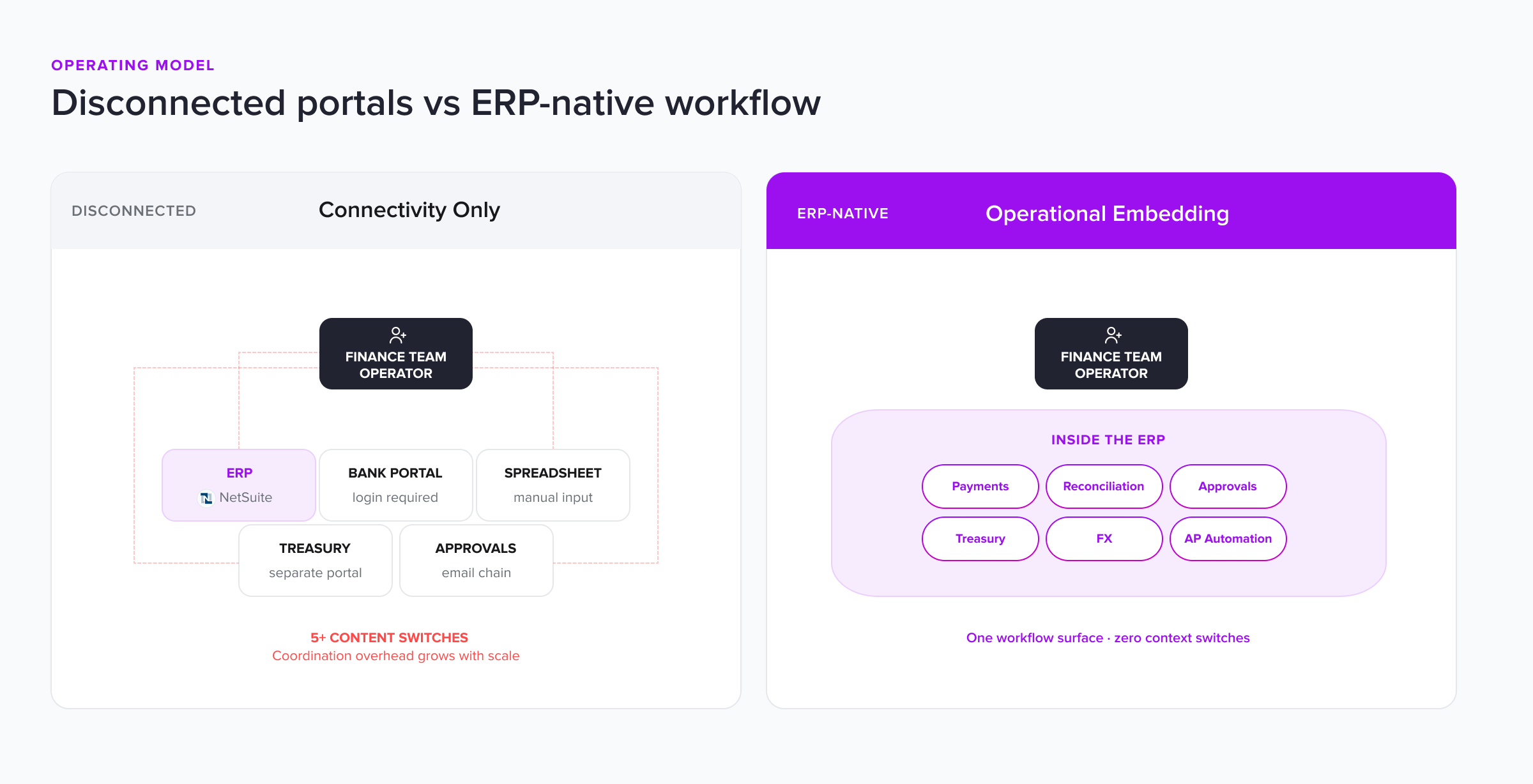
The market is now shifting from connected financial products to operationally embedded financial workflows.
This is a major evolution in embedded finance. The first phase of embedded finance focused on embedding financial products into SaaS applications.
The next phase is different. Embedded finance is moving into systems of record.
That means:
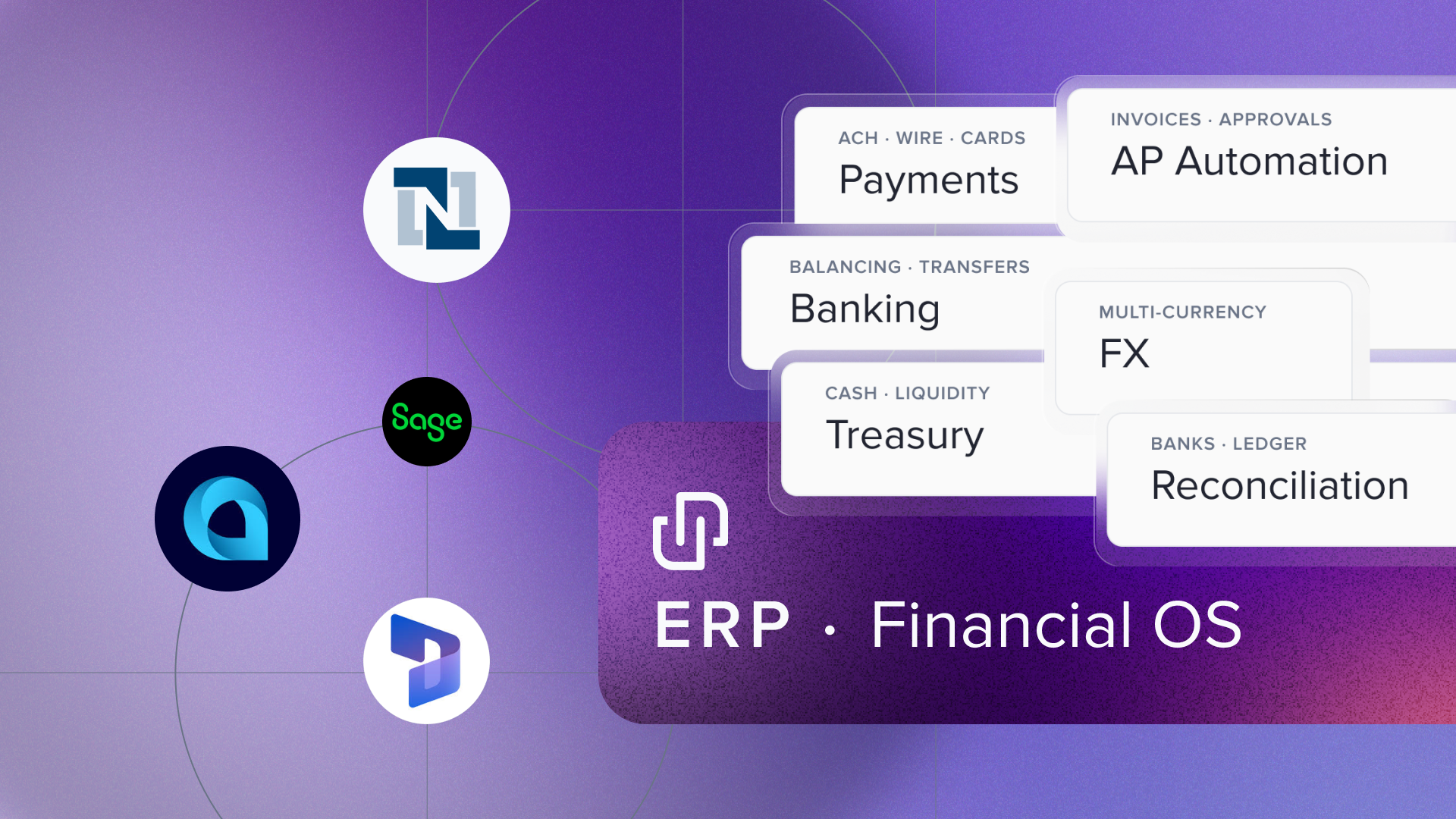
• ERP-native payments
• ERP-native treasury
• embedded banking inside ERP systems
• ERP-native reconciliation
• ERP-native FX workflows
• embedded AP automation
• operationally embedded finance workflows
The best financial products are no longer simply connected to ERP systems. They increasingly operate directly inside them. APIs move data. ERP-native workflows move operations.
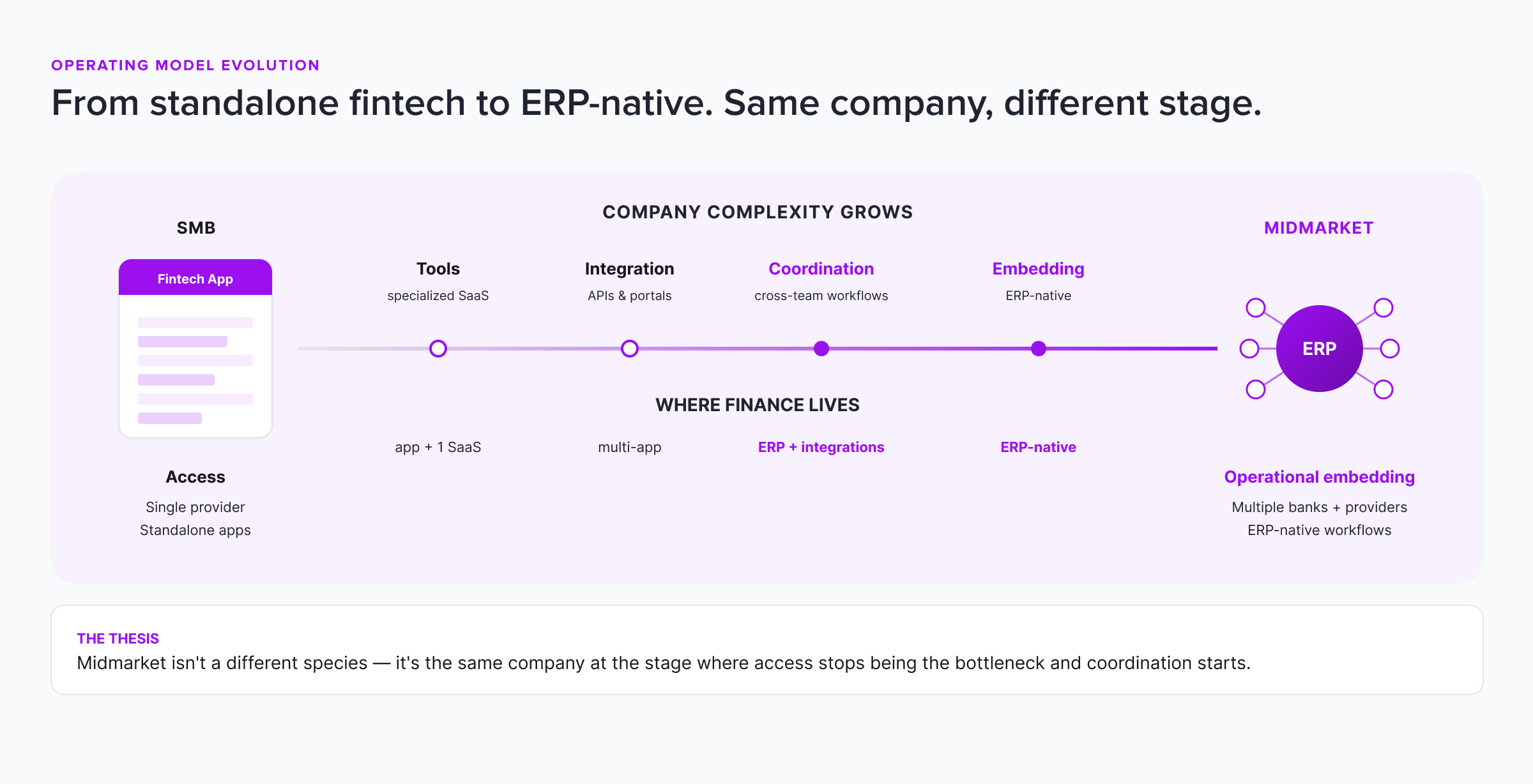
ERP-native financial workflows are operationally complex.
Every ERP ecosystem introduces:
• different APIs
• authentication models
• permissions systems
• deployment requirements
• workflow structures
• approval frameworks
• UI extension models
ERP-native treasury workflows inside Dynamics are operationally different from ERP-native AP workflows inside NetSuite or embedded reconciliation inside Sage Intacct. This complexity becomes extremely difficult to manage internally across multiple ERP ecosystems. Most financial institutions underestimate how difficult ERP-native deployment becomes at scale.
That often leads to:
• slow internal projects
• fragmented ERP implementations
• expensive ERP consulting engagements
• brittle one-off deployments
• limited ERP coverage
Rutter helps fintechs and banks launch custom white-labeled ERP-native financial experiences across major ERP ecosystems.
Your rails.
Your customer relationships.
Embedded inside the workflows your customers already know.
Rutter provides:
• ERP integrations
• embedded application infrastructure
• ERP-native workflow orchestration
• read/write financial infrastructure
• embedded finance infrastructure
• ERP expertise
• white-labeled deployment frameworks
This allows financial institutions to launch:
• ERP-native payments
• embedded treasury
• ERP-native reconciliation
• embedded AP workflows
• embedded banking experiences
across ERP ecosystems in weeks instead of years.
The next generation of financial infrastructure will not be defined solely by APIs and connectivity. It will be defined by how deeply financial products embed into operational workflows. The first generation of fintech digitized access to financial services.
The next generation will operationalize finance directly inside systems of record. And the financial institutions that win will be the ones capable of embedding modern financial rails directly into the systems their customers already operate from every day.
Launch ERP-Native Financial Experiences Faster
Book a demo to see how Rutter helps fintechs and banks launch custom white-labeled ERP-native financial workflows in weeks, not months or years.

Building integrated products is hard. We can do that together. Let's chat.