.png)
Industry
Remittance Advice: The Missing Link Between Payment and Reconciliation
Learn what remittance advice contains, how it differs from a payment confirmation, and why structured data improves invoice matching.


Across most businesses, vendor payments fall into two major categories:
Recurring expenses that bill on a fixed schedule
Invoice-based payments tied to specific periods of service
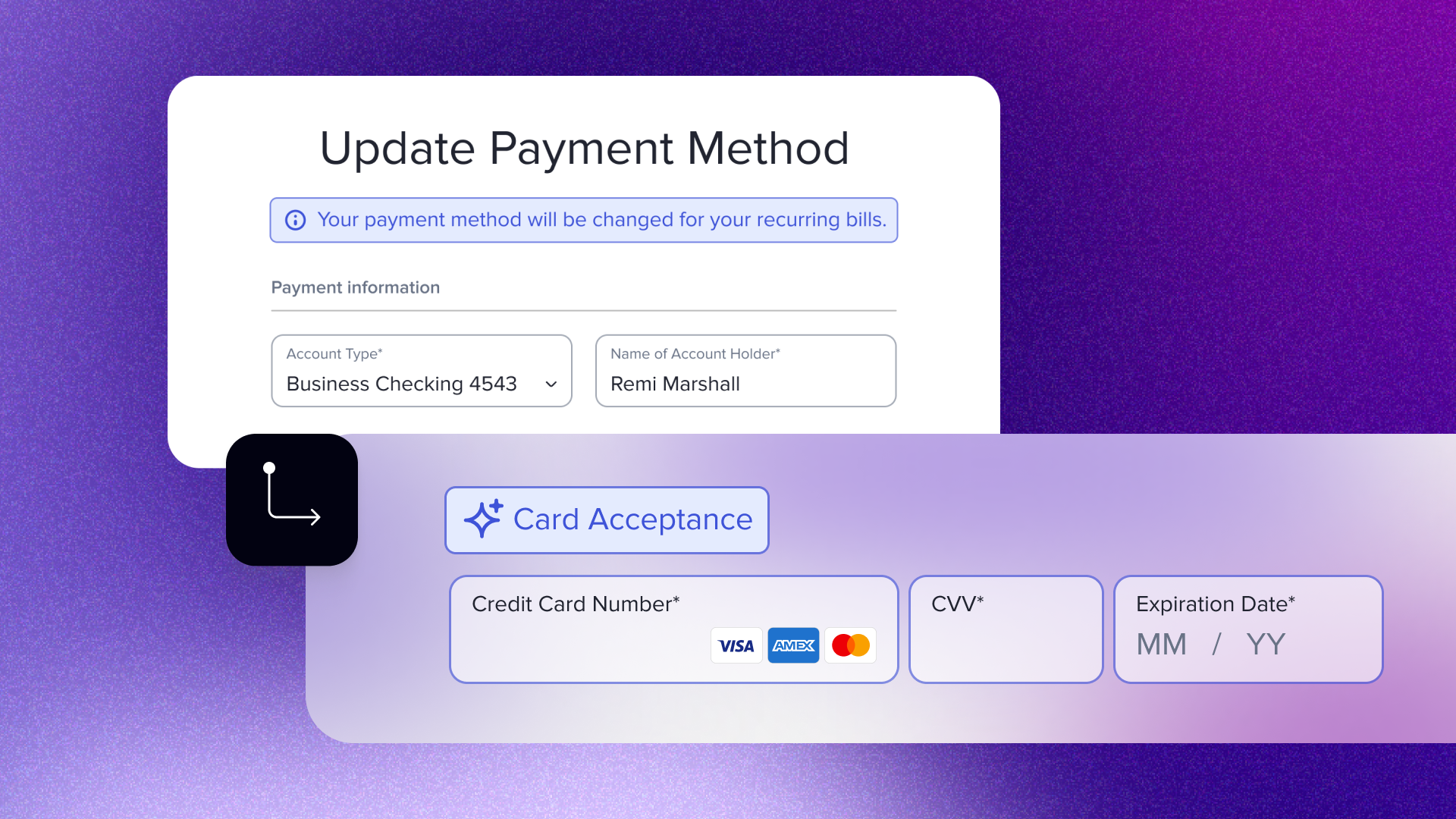
In this article, we focus on the first category, recurring spend, and how agentic AI can automate the end-to-end workflow required to switch these high-frequency payments to card. When executed well, this unlocks meaningful card adoption, richer rewards for customers, and higher interchange revenue for issuers.

Optimizing card payments for recurring expenses come with three compelling advantages:
Recurring payments are the most frequent and predictable type of vendor spend for small and mid-sized businesses. Software subscriptions, marketing tools, payroll add-ons, cloud infrastructure, and other operational services typically hit weekly or monthly.
This high velocity creates a fast feedback loop: when customers add your card to their recurring vendors, issuers quickly see activation, approval rates, and transaction quality improve—without waiting months for large invoices to settle.
Unlike invoice-based vendors, recurring expenditure tends to occur in industries where card is already a preferred payment method. SaaS tools, cloud services, communication platforms, and marketing software nearly all support cards by default. This means issuers aren’t fighting uphill battles—recurring vendors typically welcome card payments because they reduce churn and automate billing.
For many customers, recurring expenses are already on card—but not your card. Businesses often default to:
- A legacy corporate card they’ve used for years
- A bank-issued card bundled with their operating account
Modern commercial card programs usually offer superior rewards, limits, and software benefits. Helping customers transition these recurring payments to your card becomes a win-win for both parties.
To move recurring spend to card, issuers must update payment methods directly inside vendor billing portals. For SaaS tools like AWS or Slack, this requires navigating to sections like Billing → Payment Methods—often hidden inside multi-step account menus.
Some fundamental challenges include:
Unlike ERP systems or bank accounts, billing portals rarely offer OAuth connections or standardized APIs. Each vendor has its own login flow, its own security layer, and its own UI for editing payment details.
Every vendor portal is different, making it difficult to build one-off scripts or flows that work reliably across thousands of vendors. Agentic AI, combined with remote browser infrastructure, is the key to solving both of these problems at scale.
Login information used for permissioned access is sensitive data, along with credit card information passed into the browser. The best solutions involve no storage of user login information, instead persisting the state of the browser using cookies, and the right level of compliance with handling card details.
Because vendors do not expose standardized access methods, the most effective approach today is browser automation, paired with secure collection of customer login credentials.
These agents can handle many of the messy real-world complexities that traditional automation tools struggle with:
By orchestrating these steps within a secure containerized browser environment, issuers can access each vendor portal in a scalable, compliant way.
Once authenticated, the next step is updating the payment method to the customer’s preferred commercial card. This is where agentic AI provides significant leverage.
However, a few challenges require thoughtful engineering:
Vendor UIs vary dramatically. Agents must be instructed with prompts that generalize across thousands of potential layouts, labels, and navigation paths.
CAPTCHAs are increasingly common, requiring fallback strategies such as human-in-the-loop, dedicated solving services, or structured override flows.
Many payment fields are embedded in PCI-compliant iframes. Agents need to detect and interact with them safely, which often breaks naive automation scripts. Despite these challenges, browser automation—when combined with advanced AI reasoning—can reliably complete the task end-to-end. This replaces what would otherwise require enormous manual effort from customers or operations teams.
Recurring payments represent one of the highest-leverage opportunities for commercial card programs:
Agentic AI, remote browser infrastructure, and modern automation frameworks make it possible for card issuers to orchestrate this entire process seamlessly—securely logging into billing portals, navigating vendor UIs, and updating payment methods at scale.
Rutter has developed a solution as part of its supplier enablement offering to easily trigger workflows that enable permissioned access to billing portals and can switch payment methods to your preferred card. If you want to learn more, book a demo today.

Building integrated products is hard. We can do that together. Let's chat.
.png)
.png)